Tight hamstrings and hip flexors are common, especially if you spend long hours sitting, driving, working at a desk, or following a routine with limited movement. When these muscles feel restricted, everyday activities such as walking, bending, climbing stairs, squatting, or exercising can feel less comfortable.
A consistent stretching routine can help improve flexibility and comfortable range of motion. The key is to stretch regularly, move slowly, and avoid forcing your body into uncomfortable positions.
Important: Stretching should create a gentle pulling sensation, not sharp pain. If you have an injury, significant pain, numbness, weakness, or a diagnosed hip or back condition, speak with a qualified healthcare professional before starting a new stretching routine.
Why Do Your Hamstrings and Hip Flexors Feel Tight?
The hamstrings are a group of muscles located along the back of your thighs. They help with movements such as bending the knee and extending the hip.
The hip flexors are a group of muscles at the front of the hip that help bring your thigh toward your torso. Spending long periods sitting keeps the hips in a flexed position and can contribute to reduced hip-extension mobility.
Other factors that may contribute to a feeling of tightness include:
- Limited daily movement
- Repetitive exercise
- Poor flexibility
- Sudden increases in physical activity
- Muscle fatigue
- Sitting for long periods
- Inadequate warm-up
- Lack of mobility work
It’s also important to remember that feeling “tight” does not always mean a muscle is physically shortened. Your nervous system, joint mobility, movement habits, and individual tolerance can all influence how a stretch feels.
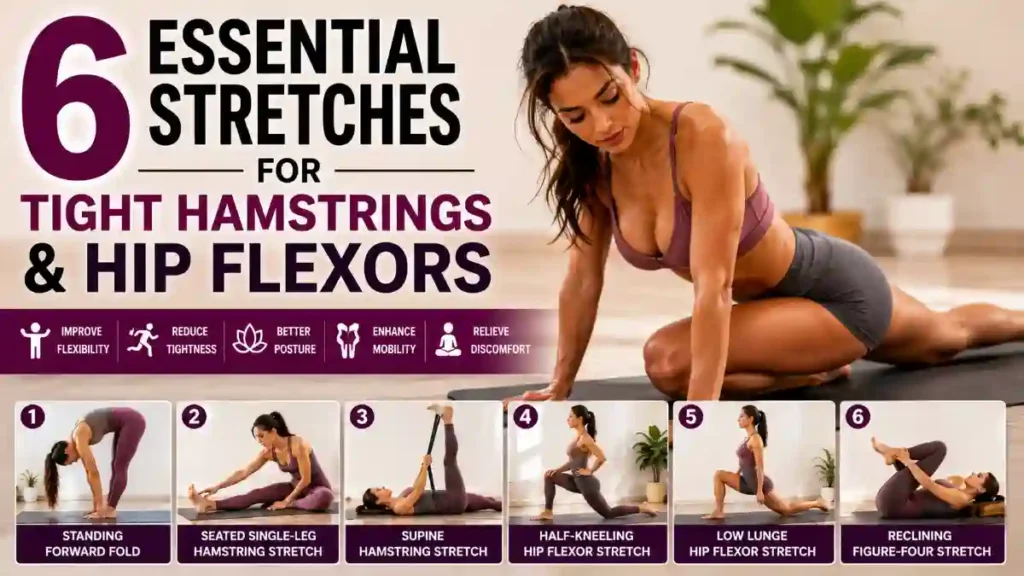
1. Standing Forward Fold
The standing forward fold is one of the simplest ways to stretch the hamstrings and the muscles along the back of your legs.
How to Do It
- Stand with your feet about hip-width apart.
- Keep your knees slightly bent.
- Slowly hinge forward from your hips.
- Allow your upper body to move toward the floor.
- Let your arms hang naturally.
- Keep your neck relaxed.
- Stop when you feel a comfortable stretch behind your thighs.
- Breathe slowly and steadily.
- Slowly return to standing.
How Long Should You Hold It?
Start with approximately 15–30 seconds and repeat 2–4 times if comfortable.
Common Mistake
Don’t force your hands to touch the floor. Your flexibility level determines how far you can comfortably bend.
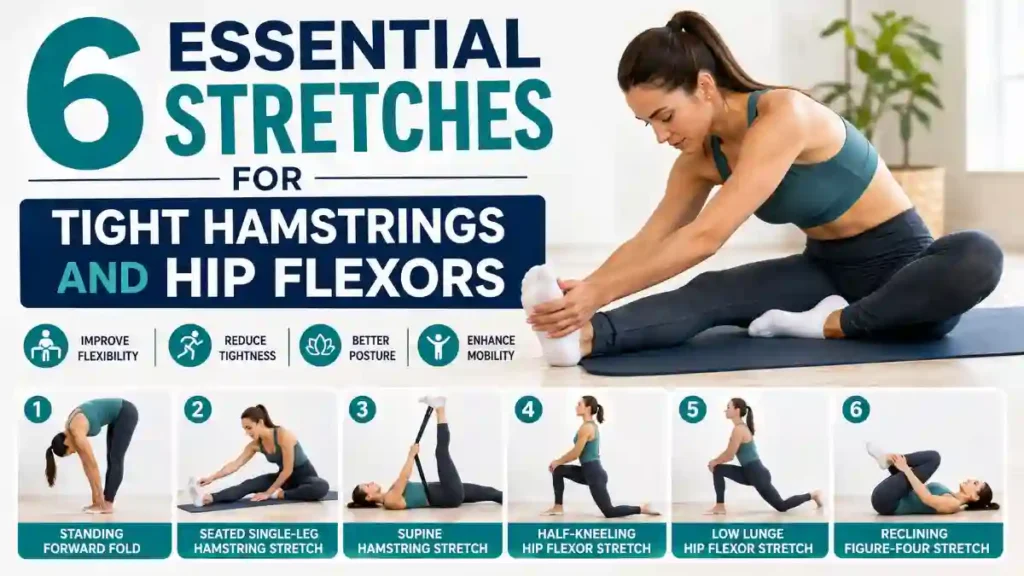
2. Seated Single-Leg Hamstring Stretch
This stretch allows you to focus on one hamstring at a time and can be easily incorporated into a beginner-friendly flexibility routine.
How to Do It
- Sit on the floor with one leg extended.
- Bend the opposite knee.
- Place the bent foot comfortably near the inner thigh.
- Sit tall with your spine extended.
- Slowly hinge forward from your hips.
- Reach toward the extended leg.
- Avoid rounding your back excessively.
- Stop when you feel a gentle stretch behind the thigh.
- Hold the position while breathing normally.
- Repeat on the opposite side.
Hold
Hold for approximately 15–30 seconds per side.
What Should You Feel?
You should feel gentle tension along the back of the extended thigh.
If you experience sharp pain behind the knee, numbness, or unusual tingling, stop the exercise.
3. Supine Hamstring Stretch
The supine hamstring stretch is performed while lying on your back, making it a comfortable option for people who don’t enjoy standing stretches.
How to Do It
- Lie comfortably on your back.
- Bend both knees.
- Slowly raise one leg toward the ceiling.
- Hold behind your thigh or use a yoga strap if necessary.
- Slowly straighten your knee as far as comfortable.
- Keep your pelvis relaxed against the floor.
- Keep the opposite leg comfortable.
- Hold the stretch while breathing slowly.
- Lower the leg.
- Repeat on the other side.
Hold
Hold for approximately 15–30 seconds per side and repeat 2–4 times.
Why Try This Stretch?
Because your back is supported by the floor, you can concentrate on your leg position without worrying about balance.
4. Half-Kneeling Hip Flexor Stretch
The half-kneeling hip flexor stretch is particularly useful if your hips feel stiff after sitting for long periods.
How to Do It
- Start in a kneeling position.
- Bring one foot forward.
- Place the front foot firmly on the floor.
- Keep your torso upright.
- Gently move your hips forward.
- Keep your abdominal muscles lightly engaged.
- Avoid excessively arching your lower back.
- Stop when you feel a stretch at the front of the hip of the kneeling leg.
- Hold the position while breathing normally.
- Switch sides.
Hold
Hold for 15–30 seconds per side.
Common Mistake
Don’t simply push your hips as far forward as possible. Focus on maintaining control and keeping your torso upright.
5. Low Lunge Hip Flexor Stretch
The low lunge is another effective movement for working on hip-extension mobility while stretching the front of the hip.
How to Do It
- Start in a kneeling position.
- Step one foot forward.
- Place the front foot firmly on the floor.
- Keep the back knee comfortably positioned behind you.
- Lift your chest.
- Slowly shift your hips forward.
- Keep your pelvis controlled.
- Avoid collapsing into your lower back.
- Hold the stretch while breathing slowly.
- Return to the starting position and switch sides.
Make It More Comfortable
Place a folded towel or yoga mat underneath your back knee if the floor feels uncomfortable.
What Should You Feel?
You should feel a gentle stretch through the front of the hip and upper thigh of the back leg.
6. Reclining Figure-Four Stretch
The reclining figure-four stretch focuses primarily on the glutes and outer hip, making it a useful complementary movement for overall hip mobility.
How to Do It
- Lie on your back.
- Bend both knees.
- Place one ankle over the opposite thigh.
- Keep the crossed leg relaxed.
- Bring the supporting thigh toward your chest.
- Hold behind the supporting thigh.
- Gently draw the leg toward you.
- Keep your shoulders relaxed.
- Breathe slowly.
- Switch sides.
Hold
Try holding the position for 15–30 seconds per side.
You should feel the stretch around the outer hip and glute area rather than sharp discomfort in the knee.

How to Combine These 6 Stretches
You don’t need to spend a long time stretching every day. A short and consistent routine can be easier to maintain.

| Exercise | Suggested Hold |
|---|---|
| Standing Forward Fold | 15–30 seconds |
| Seated Single-Leg Hamstring Stretch | 15–30 seconds per side |
| Supine Hamstring Stretch | 15–30 seconds per side |
| Half-Kneeling Hip Flexor Stretch | 15–30 seconds per side |
| Low Lunge | 15–30 seconds per side |
| Reclining Figure-Four | 15–30 seconds per side |
Move slowly between exercises and avoid bouncing.
When Should You Stretch?
The best time to stretch depends on your goal.
Before Exercise
If you’re preparing for running, sports, strength training, or another demanding activity, begin with light movement and dynamic mobility.
A simple warm-up can include:
Light movement → Dynamic mobility → Workout
Long static stretches immediately before intense activity may not be the best choice for every type of exercise.
After Exercise
Gentle static stretching can be included after your workout if improving flexibility is one of your goals.
On Rest Days
You can also perform these stretches as part of a short mobility session on days when you aren’t exercising.
How Often Should You Stretch?
Consistency is more important than trying to force an intense stretch occasionally.
A practical starting point is:
2–4 stretching sessions per week
As your body becomes accustomed to the routine, you can adjust the frequency according to your goals and how you feel.
Regular stretching can gradually improve range of motion and flexibility.
How Long Should You Hold a Stretch?
For general static stretching, 15–30 seconds is a practical starting range.
You don’t need to push yourself into extreme positions.
Instead:
- Move slowly into the stretch.
- Stop at comfortable tension.
- Breathe normally.
- Maintain control.
- Gradually increase your range over time.
The goal is to build flexibility progressively rather than forcing a deeper stretch during one session.
Should You Stretch Until It Hurts?
No.
A good stretch should generally feel like mild or moderate tension.
Avoid:
- Sharp pain
- Stabbing sensations
- Numbness
- Tingling
- Burning sensations
- Joint pain
- Aggressive bouncing
- Forcing a joint beyond a comfortable range
If a particular movement causes pain rather than a normal stretching sensation, stop and reassess your technique.
Tips for Better Hamstring and Hip Flexor Flexibility
1. Warm Up First
Spend a few minutes walking or performing gentle movements before deeper stretching.
2. Don’t Bounce
Use slow and controlled movements.
3. Keep Breathing
Try not to hold your breath while stretching.
4. Work Both Sides
Even if one side feels tighter, stretch both sides.
5. Progress Slowly
Don’t try to achieve maximum flexibility immediately.
6. Stay Consistent
A few minutes of regular mobility work can be more useful than an occasional long session.
7. Add Strength Training
Flexibility is only one part of mobility. Strengthening muscles through a comfortable range of motion can complement your stretching routine.
A Simple 10-Minute Stretching Routine
If you’re short on time, try this simple sequence:
Minute 1
Gentle walking or marching in place.
Minutes 2–3
Standing Forward Fold.
Minutes 4–5
Supine Hamstring Stretch.
Minutes 6–7
Half-Kneeling Hip Flexor Stretch.
Minutes 8–9
Low Lunge.
Minute 10
Reclining Figure-Four Stretch.
Move slowly and spend a little extra time on the side that feels more restricted.
Who Should Be Careful With These Stretches?
Gentle stretching is suitable for many healthy adults, but you should be more cautious if you have:
- A recent muscle strain
- A significant hip injury
- A knee injury
- Severe or persistent back pain
- Numbness or tingling
- Recent surgery
- A known joint condition
- Severe pain during movement
If you’re recovering from an injury or have a medical condition, speak with a qualified healthcare professional before beginning a new stretching program.
Stretching should also not be treated as a complete injury-prevention strategy. Flexibility is only one part of overall physical health.
Final Thoughts
Tight hamstrings and hip flexors can make everyday movement feel restricted, particularly when your routine involves long periods of sitting or repetitive activity.
A combination of hamstring and hip-flexor stretches can help you gradually improve flexibility and comfortable range of motion.
The six stretches covered in this routine are:
- Standing Forward Fold
- Seated Single-Leg Hamstring Stretch
- Supine Hamstring Stretch
- Half-Kneeling Hip Flexor Stretch
- Low Lunge Hip Flexor Stretch
- Reclining Figure-Four Stretch
Start gently, breathe normally, and focus on consistency rather than forcing a deeper stretch.
Frequently Asked Questions
Can stretching loosen tight hamstrings?
Regular stretching can improve hamstring flexibility and range of motion. The results generally become more meaningful when stretching is performed consistently over time.
How long should I hold a hamstring stretch?
A practical starting point is around 15–30 seconds per stretch. You can repeat the stretch according to your comfort and goals.
Can sitting make my hips feel tight?
Long periods of sitting can contribute to reduced hip-extension mobility and may make the hips feel stiff or restricted.
Should stretching hurt?
No. You should generally feel gentle or moderate tension rather than sharp pain.
How quickly can flexibility improve?
Some range-of-motion changes can occur immediately after stretching, while longer-term improvements generally require consistent practice.
Can I stretch every day?
Gentle stretching can be incorporated regularly, but the ideal frequency depends on the intensity of the stretching, your goals, and how your body responds.
Is stretching enough for better mobility?
Stretching is useful, but overall mobility can also benefit from strength training, regular movement, good exercise technique, and adequate recovery.